
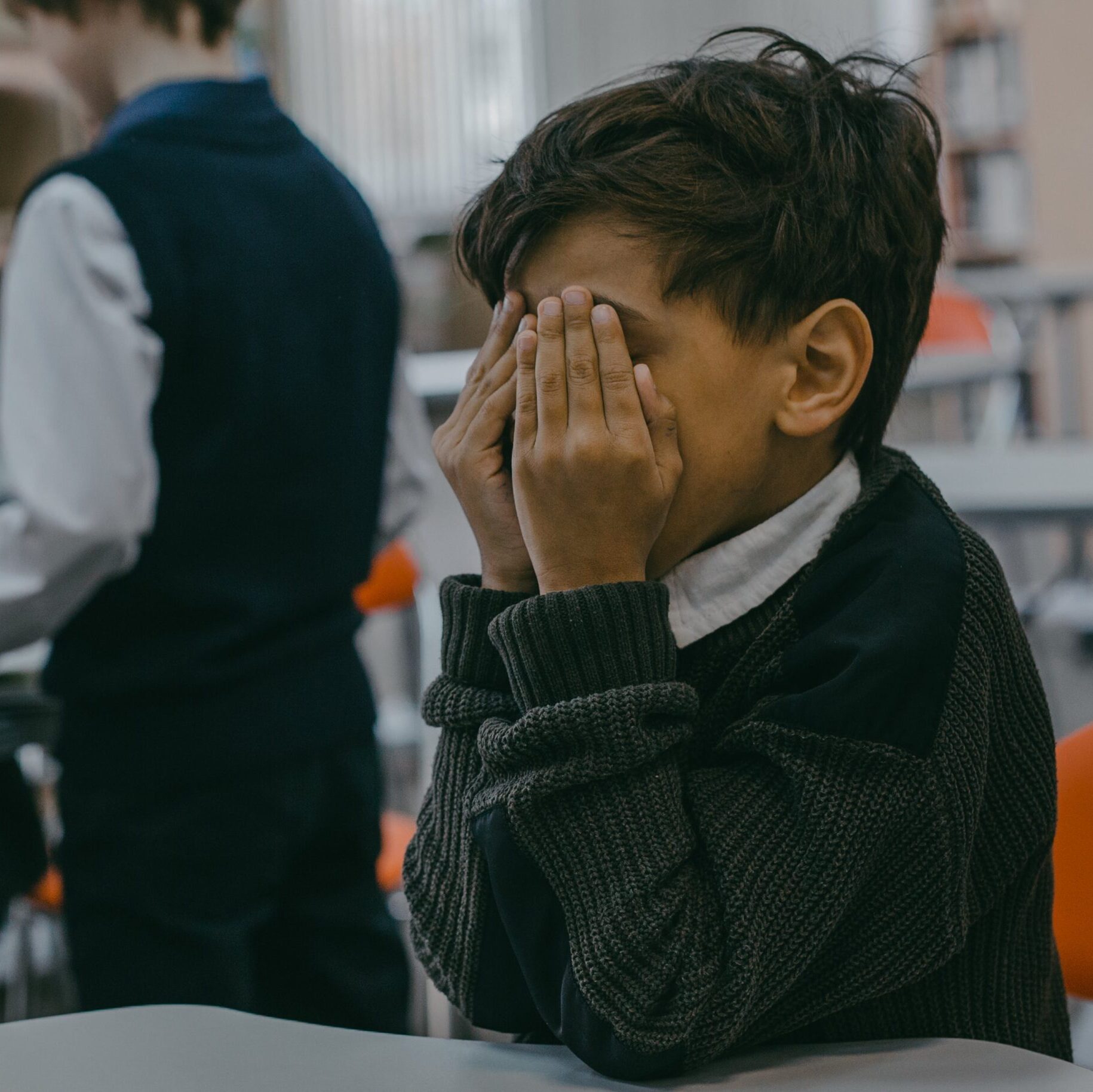
In this personal reflection piece, Shalini breaks the silence, sharing her own story and those of others who grew up bullied in Indian schools. Their voices contain their pain and resilience, urging us to make bullying-prevention central to Indian education.
“Here,” said my bully, offering me his handkerchief.
I was thoroughly bullied in high school after I rejected a romantic proposal. We were academic competitors, and that only worsened things. He spread rumours online, called me names, and questioned my character whenever I did well. My achievements became my punishment.
I was crying in the principal’s office, shaken but finally brave enough to report him. It was after the lockdown. I had rehearsed my words a hundred times, had talked to my parents, informed the teachers, and finally resorted to what I thought was the ultimate move. It had been a yearlong nightmare. I was depressed, suicidal and lonely. So when he offered me compassion or pity or whatever that was, I was ruffled.
For a moment, I questioned whether I had dreamt up the things he had done. The slurs, the mockery, the constant humiliation. I stopped crying and wondered if he had been right all along, if he was actually the good guy, if it was okay that he posted online about me, that he removed me from all WhatsApp groups, if I truly did not deserve any friends.
But clarity returned the next day. Even after the ultimate move, he did not stop. After graduating high school, when I was in college, I ran into him at McDonald’s, and I ran out without collecting my order. I realised then that what transpired in the past still followed me, even after two years. Today, four years later, as I complete my Masters in the UK, I still hear his voice in the library sometimes at night, sharp, vivid and unrelenting.
Every time I talk about it, people reassure me:
“You will never be bullied like that again.”
“You are stronger now.”
They are right. I would not stay silent anymore. I would not let anyone do that to me again. But this is not a sob story. It is one of many stories that show what it takes to survive places that pretend everything is fine. School bullying in India is not unusual, but the way it gets dismissed makes the experience smaller than it ever was. These are not stories of weakness. These are testimonies of resilience.
When Adults Look Away
I struggled because the adults around me didn’t understand.
My parents told me to “focus on studies.”
My principal issued a warning and moved on.
Nothing changed.
And there are so many stories like mine, especially in India’s private schools. Students who were never protected, who grew into adults carrying a quiet terror. We go to work, pay taxes, succeed, but the echoes remain.
Stories that still hurt
Am, a young girl in seventh grade, became a target when a popular girl at her all-girls school developed a crush on her. What began as something harmless quickly spiralled into cruelty.
Peers started nasty rumours; friends of the popular girl verbally and physically attacked her. Even teachers joined in.
She was locked in washrooms, mocked during lunch, excluded from groups. Her drawing teacher insulted her publicly, and classmates mocked her through WhatsApp statuses.
Am found solace in another girl from her class who was also being bullied for a similar reason. The two became close, bound by the quiet understanding of shared pain.
“We have a similar scar on both of our wrists,” Am said. “She was trying to hurt herself in the washroom, and I tried to get the compass away but it went through both of our hands.”
The bullying continued for three years. The adults around them failed to intervene. What began as a rumour left both girls stigmatized and self-harming by tenth grade.
Dp, now 24, still remembers the girls in her private school in Gwalior who refused to sit next to her because her skin wasn’t fair. At twelve, she scrubbed her face with a pumice stone, trying to “fix” her skin. She developed rashes but never complained. She now struggles with public speaking and self-worth and she’s stayed in relationships that hurt just to feel visible.
Many women like Dp, shared stories of exclusion and harassment in middle school because of India’s obsession with ‘fairness’. Sadly, we are still torturing young women to have fair skin instead of focusing on building a fair society for them.
Anu remembers the names of her bullies, but not her friends.
“They weren’t the type to shove me,” she said. “They were the class monitors, the ones the teachers trusted.”
They whispered cruel things, made her feel small, while teachers looked away.
“In L.K.G. and U.K.G., teachers just want to get through the day,” she said. “Nobody really cares.”
A System Built on Silence
What these stories reveal isn’t just individual cruelty. It’s a system that rewards silence and punishes vulnerability.
India has some of the highest levels of bullying and cyberbullying in the world but we have never had an effective national initiative to make school bully-free. In a culture so deeply rooted in mocking or marginalizing the other, denial around bullying is strong. The result is an educational system that considers there is no need to teach its students empathy and the school bullies grow up into citizens, parents, administrators who perpetuate this denial.
Indian schools often prioritise discipline and academic performance, overlooking the fact that emotional well-being is a foundational prerequisite for achieving both. Teachers are overworked, undertrained in conflict resolution, and sometimes unknowingly reinforce bullying by ignoring it. Parents dismiss cruelty as “part of growing up.”
The result? Schools that look polished on the outside but leave too many children suffering quietly inside.
If we truly want to change this, schools must go beyond punishment and create cultures of empathy.
This isn’t about revenge – it’s about re-education. We don’t want just psychological fixes; we want a shift. A new culture where kindness is taught, practised, and celebrated.
If we can teach children to compete, we can also teach them to care. Since, for most, it comes naturally. Because a school free of bullying isn’t just a dream – it’s an educational necessity.
Shalini is a writer for Power of Zero and part of our volunteer comms team.


Leave A Comment