October 19, 2026
Punishment Doesn’t Stop Bullying — What Actually Works
Every school has tried it. A student causes harm, a consequence follows.
For a few days, things seem quiet again. Until they aren’t.
I grew up in the standard education system in India, went to a state-board school, where student discipline, respect for authority, and deterrence remained constant themes. School authorities reprimanded Inappropriate actions, and made an example of students who repeatedly crossed the line. It’s a familiar scene to see a child being sent out of class. However it’s an unfamiliar question to ask – Did that change their behaviour? Or just hide it better?
The consequences of bullying in India
India’s culture of punishment dates way back into deep-rooted traditions, colonial-era penal architecture and modern legal reforms. Texts like the Manusmriti and the Arthashastra outlined tiered systems of danda (punishment). Even though the challenges in school life may have changed in today’s age, our education system still carried traces of that old architecture – that fear and punishment build life-long discipline. A Scroll.in article on this history notes, “Running through all these forms of punishment….is the idea of torture, the cultivation of fear, and the disciplining of the body and social behaviour.” This idea continues to shape several school leaders’ mindsets, and influences how schools design policies and processes for responding to harm.
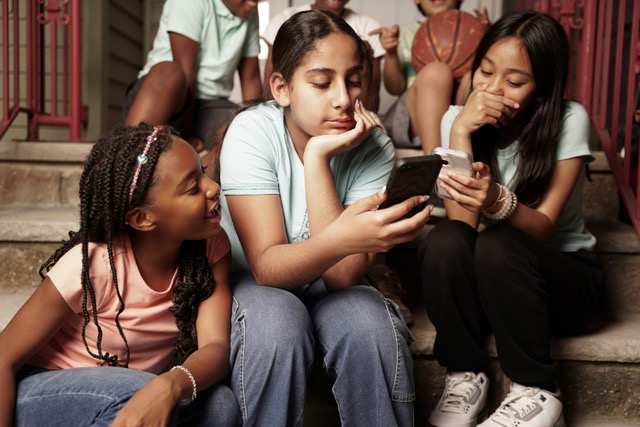
However, the landscape that children in India and across the world are currently navigating doesn’t fit the model of having children ‘face the music’. The internet, rising competition, and growing expectations have created new contexts for bullying – whether relational, digital, reactive, or born out of digital spaces children inhabit. Group shaming, exclusion, screenshots weaponized in seconds. misinterpretation, and the slow grind of being left out. These patterns compound quietly long before any adult is aware.
Rethinking how schools respond to bullying
The instinct to respond with visible consequence is understandable. We expect it to build lasting change. But it backfires – the evidence supports this. So where do we draw the line? Where can we stop and say, punishment may not be the right tool to fix this, let’s look at another option.
Schools are accountable to parents, to boards, and a society that expects them to stand for something. When harm occurs, doing something decisive feels like leadership. The question worth sitting with is whether a culture that is built on fear and control (however well intentioned), truly points children towards safe and well-meaning behaviour.
Every bullying situation has two problems
The first is managing the harm done to the targeted student, which needs immediate relief, support from peers, and an end to the repeated bullying behaviour – in short, restorative actions. The second is managing the student’s bad behaviour. This needs an understanding of intent, highlighting consequences and expectations, and a plan for behaviour change, which is disciplinary work.
Punishment Addresses Adult Fear, Not Child Change
Punishment often comforts adults more than it helps children. Bullying can stem from unmet emotional needs, dysregulation, or learned aggression. In these cases, punishment addresses the precise moment when a school leader becomes aware of the harm – not the underlying trauma of the bully. When adults punish bullying behaviour, the bully-victim loophole can widen.
If I am allowed to re-state the overused statement, ‘India is a melting pot of cultures where the world changes every few 100 kms’, – I also understand that what works in one state, may fail in another. And at the risk of repeating myself, our children are growing up in a world of extraordinary social complexity, both online and offline. Many carry experiences of harm that their schools may not be equipped to see, let alone address. I dream of safe schools where we move towards shaping a culture from one that controls behavior to one that nurtures character and chooses kindness.
Consequences alone rarely repair the harm for the child who was targeted, and don’t give either student involved any tools to behave differently the next time. Instead, punishment can breed a cycle of revenge, driving students to seek retaliation through online platforms where adults find it harder to identify and address the behaviour. And the cycle of cyberbullying continues.
The question that school leaders might ask is not what consequence fits this behaviour – but what does this child, and this situation really need from us for lasting change? That’s a harder question. It’s also the right one.
Frequently asked questions
Punitive discipline—including physical punishment and verbal humiliation—remains a persistent problem in Indian schools, although the available research does not establish a reliable current nationwide prevalence rate. Section 17 of the Right to Education Act prohibits physical punishment and mental harassment in elementary education, but research documents a substantial gap between policy and practice. Historically, the scale was considerable: Young Lives data collected in 2009 found that 78% of eight-year-olds in its Indian sample reported being physically punished by a teacher during the preceding week; this was a regional sample, not a nationally representative estimate. More recently, a study published in 2024 involving middle-school pupils in Rampur Naikin, Madhya Pradesh, confirmed that corporal punishment continued despite the prohibition. The most defensible conclusion is therefore that punitive discipline has historically been widespread and continues in some schools, but older, high prevalence figures should not be presented as the proportion of Indian pupils experiencing it today.
SHARE THIS ARTICLE VIA

Related Articles
Every school needs a Kindness Summit
Bullying is widespread. Kindness is too, when schools create the conditions where it can flourish. Today we release our free Kindness Summit Guide in support of UNESCO's day against bullying and cyberbullying. Bullying remains the most common form of violence children face at school. In many countries, more than a third of 13–15-year-olds report being [...]
Punishment Doesn’t Stop Bullying — What Actually Works
Every school has tried it. A student causes harm, a consequence follows. For a few days, things seem quiet again. Until they aren’t. I grew up in the standard education system in India, went to a state-board school, where student discipline, respect for authority, and deterrence remained constant themes. School authorities reprimanded Inappropriate actions, and [...]
Writing Without Permission: How the Internet Democratised Everything
As a teenager, I rushed home from school, turned on my computer, and spent my afternoons until bedtime learning to build my blog. Blogging had taken off in the mid-to-late 2000s, and I was in secondary school at the time. From around the age of 14, I knew I wanted to become a journalist and [...]